Few pursuits blend creativity, science, and patience as seamlessly as gardening. Whether you’re nurturing a modest home garden or designing an expansive garden landscape, the act of cultivating plants transcends mere hobby—it’s a dialogue with nature. Yet, for all its rewards, gardening demands more than enthusiasm; it requires strategy, observation, and an understanding of the delicate balance between aesthetics and functionality. The question isn’t just *how* to grow a garden, but *how to grow one that thrives*.
The Psychology Behind Why We Garden
Gardens are more than collections of plants; they’re extensions of our identities. Studies in environmental psychology reveal that garden design influences mood, productivity, and even cognitive function. A well-planned flower garden, for instance, doesn’t just please the eye—it reduces cortisol levels, while a vegetable garden fosters a sense of accomplishment and self-sufficiency. The act of digging, planting, and pruning becomes a form of therapy, a tangible counterbalance to the digital fatigue of modern life.
But why do some gardens feel like sanctuaries while others become burdens? The answer lies in intentionality. A backyard garden that evolves organically, without a guiding vision, often succumbs to chaos. Conversely, spaces that balance spontaneity with structure—like the curated wildness of a botanical garden—achieve harmony. The key is to design with purpose, not just whimsy.
Garden Design: Where Form Meets Function
Effective garden design is a study in contrasts: symmetry vs. asymmetry, color theory vs. texture, hardscaping vs. softscaping. The most enduring gardens, from Japanese Zen courtyards to English cottage plots, adhere to a few universal principles. First, scale and proportion dictate that no element—whether a towering oak or a delicate trellis—should overwhelm the space. Second, unity and rhythm create cohesion, guiding the eye through the landscape with repeating motifs or color gradients.
For urban dwellers, small-space gardening presents unique challenges. Vertical gardens, container plantings, and multi-functional furniture (think benches with built-in planters) maximize utility without sacrificing beauty. Meanwhile, rural garden landscapes can afford to sprawl, but even here, zoning—dividing the space into distinct areas for dining, relaxation, or cultivation—prevents visual clutter. The goal isn’t perfection, but a design that feels *inevitable*, as if the garden has always belonged.
The Role of Hardscaping in Garden Aesthetics
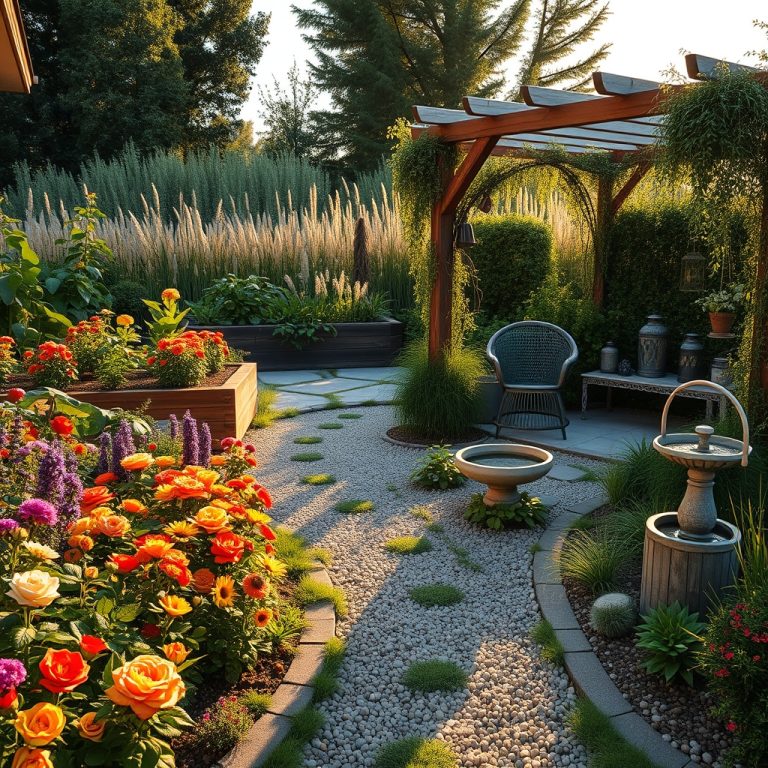
Too often, gardeners fixate on plants while neglecting the bones of the space: pathways, walls, and water features. Hardscaping isn’t just functional—it’s the skeleton that gives a garden its structure. A gravel path meandering through a flower garden invites exploration, while a stone retaining wall can double as seating. Even in a vegetable garden, raised beds or pergolas add architectural interest, elevating the space from purely utilitarian to visually compelling.
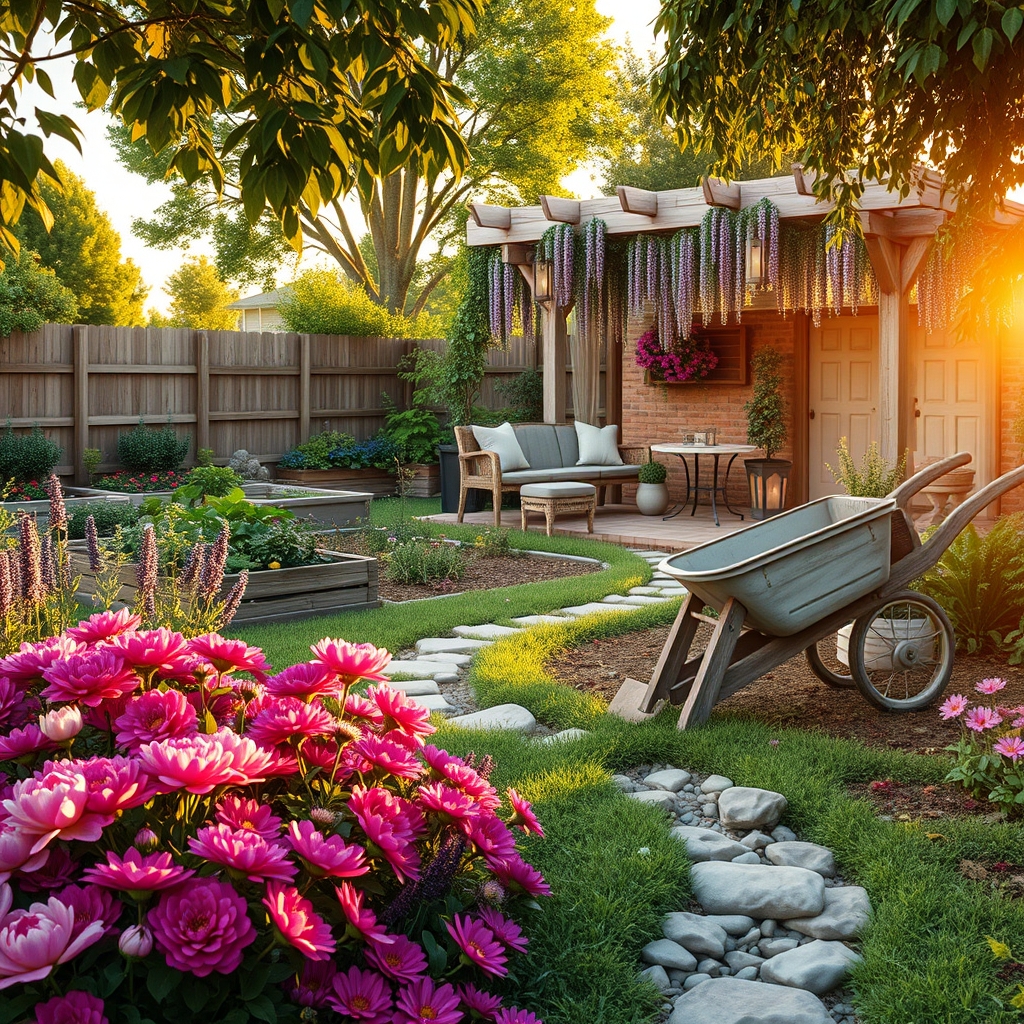
Material choice matters. Natural stone blends seamlessly into garden landscapes, while modern metals or concrete lend an industrial edge. The best hardscaping feels like a natural extension of the environment, not an imposition. Consider, for example, how a wooden arbor draped in wisteria softens the rigidity of a geometric patio, or how a dry creek bed mimics the organic flow of water in a drought-tolerant garden.
Beyond Beauty: The Practicality of Garden Decor
Garden decor is often dismissed as frivolous, but the right accents serve dual purposes: they enhance beauty *and* functionality. Lighting, for instance, extends the garden’s usability into the evening while creating dramatic shadows. Solar-powered lanterns or LED string lights add warmth without increasing energy costs, while uplighting a specimen tree draws attention to its form.
Seating is another critical yet overlooked element. A strategically placed bench or swing transforms a backyard garden into a destination, not just a view. Even in a botanical garden, where the focus is on plant collections, thoughtfully placed seating encourages visitors to linger, deepening their connection to the space. Other decor elements—like weather-resistant sculptures, birdbaths, or wind chimes—add layers of sensory engagement, making the garden a multisensory experience.
Sustainable Decor: Beauty Without Waste
The most compelling garden decor isn’t mass-produced; it’s repurposed, recycled, or locally sourced. Upcycled materials—like old windows turned into cold frames or pallets transformed into vertical planters—add character while reducing waste. Even plants can serve as decor: a living wall of succulents or a topiary hedge becomes a focal point without the need for additional ornamentation.
Sustainability extends to maintenance, too. Drip irrigation systems conserve water, while permeable paving reduces runoff. A garden that respects its ecosystem—by using native plants, avoiding chemical pesticides, and composting organic waste—doesn’t just look better; it *is* better, for both the environment and the gardener’s peace of mind.
From Soil to Soul: The Lifecycle of a Garden
A garden is never static. It evolves with the seasons, the gardener’s skill, and even the plants’ whims. The first year is about foundation: testing the soil, selecting hardy perennials, and learning the microclimates of the space. By the third year, the garden begins to reveal its personality—some plants thrive, others falter, and unexpected volunteers (like self-seeded poppies or volunteer tomatoes) add serendipitous charm.
The most successful gardeners are those who embrace this impermanence. A flower garden that’s a riot of color in spring might fade to green by midsummer, only to burst into fall hues. A vegetable garden that yields bumper crops one year might struggle the next, teaching resilience and adaptability. The lesson? Gardening isn’t about control; it’s about collaboration—with the soil, the weather, and the passage of time.
Perhaps the greatest reward of gardening isn’t the harvest or the compliments, but the quiet moments of connection: the hum of bees in a botanical garden, the scent of rain on warm earth, or the satisfaction of watching a seedling grow into a towering sunflower. These are the intangibles that turn a plot of land into a sanctuary. Whether your garden is a windowsill of herbs or a sprawling garden landscape, the principles remain the same: observe, adapt, and let the space tell *its* story as much as you tell yours. The rest—beauty, bounty, and peace—will follow.
About the Author